Tuesday, January 3, 2017

ARE YOU THERE GOD? IT IS I, ROBOT? 
from ‘The Meaning of Life 
and Other Fictions’* 
- a novel in progress by Tom Cho

from Tom Cho's BLOG - Posted by  on 18 September 2010 in Blog | 0 comments
I’ve been going through a “Let’s write about robots” phase.
I really enjoy writing about robots. However, surely I’m not the only writer to fantasise about getting a robot to do my writing for me?
Nominated by Prism International for a Pushcart Prize,** Tom Cho’s “Are You There God? It Is I, Robot” is an extremely engaging and unique take on iconic texts and age old themes. Citing the central relationship in the musical My Fair Lady as a misogynist connection between “a phonetics professor and a Cockney flower girl” was a striking moment in a fall reading at Glad Day Bookstore’s Naked Heart Literary Festival. This was a refreshing reminder of how intertextuality can unite the old and the new - the past and the future.

A complex, intricately woven narrative, described by Cho as - "written from the point of view of an unnamed protagonist who encounters Robot Judy Blume, who shares [with him] a novel she has written...thereby leading into the story-with-a- story featuring Robot [a robot named 'Robot' who represents another protagonist character within Cho's novel]."

*

Cho’s direct and very effective performing style, while reading from the excerpt, matches his writing style - as seen in Prism - as an at times spare and engaging tone describing the dilemma of the central character who finds herself in the midst of futuristic connections to historic authors from the past.

"At this point , a beam of light emits from Robot Judy Blume’s chest, projecting an image of a page before me, projected at a perfect reading height."

Later a robot protagonist (named Robot) finds herself watching an old Hollywood musical on television depicting the relationship regarding the flower girl and the phonetics prof who attempts to teach “her to speak a variety of English that's accorded high prestige.” Cho’s use of the class and gender relationship that the My Fair Lady reference evokes is a clever device that draws readers into the text and keeps the actions and the thought processes of his unique characterizations moving forward in fascinating and entertaining ways.

"Although she did not have access to a misogynist and classist professor of phonetics with an authoritarian teaching style, Robot knew that this was okay. She had already worked out that if this film was anything to go by, the only tolerable way for her to learn what was required of her was distance education or some other approach that emphasized self-directed learning."

The subtly comic tone of this segment - giving the young female robot a kind of independent feminist agency - and the overall excerpt, is an exciting indication of what the overall novel embraces as it journeys through “The Meaning of Life and Other Fictions.”  

Truth and fiction unite in a way that gestures toward the blend of what was once sic-fi (Robot narratives) and a contemporary environment where the presence of robots begins to blur with our sense of 'human' self identity. The varied truths of humanity, artificial intelligence, and multiple meanings for various life forms are welcome themes in a world where the meaning of life becomes less and less clear as each new day trumps our sense of hope with yet another dire forecast. Like his earlier work in a collection of frequently whimsical and enlightening flash fiction (LOOK WHO'S MORPHING - see above image) Cho’s new work breathes life - and hope - into literary forms both old and new.


* from Prism International's Spring 2016 issue, excerpted from Tom Cho's novel in progress "The Meaning of life and other Fictions' - section from novel in progress entitled; ARE YOU THERE GOD? IT IS I, ROBOT 

for further info go to - 
http://tomcho.com/wp/signing-literary-agent-pushcart-prize-nomination/


**The Pushcart Prize is an annual US literary competition that honours work that has been published in small presses.


The Routledge Fourth Wall series specializes in short books about famous plays. Poet, arts journalist, and acclaimed musical theatre expert, Keith Garebian has neatly combined queer theory, biography, and his own special brand of accessible, engaging writing that adds a unique perspective to the presence of a great play that became a great musical. He doesn’t shy away from the intimate personality details that mingle with the characters that both Julie Andrews and Rex Harrison brought to their interpretations of the pivotal roles of Eliza and Henry. Nor does he mince words about Moss Hart’s presence as a closeted homosexual director who brought the kind of vigour and skill necessary to push this iconic score through arduous rehearsals, revisions, and a variety of fascinating behind the scenes scenarios. My favourite is Hart’s wife Kitty Carlisle, a woman who rose (at one point in her varied career) to miniature fame as a panelist on the television game show To Tell the Truth when I was a growing fairy. There was something both regal, smug, and endearing about her old world, socialite grandeur in the midst of a kind of hybrid precursor to the rampant reality television we find ourselves drowning in today. 
 Having heard rumours of his [Moss Harts’s] bisexuality, Carlisle once asked him: “Are you homosexual?” To which he replied: “Absolutely not!” (29)
In light of a later insertion in Garebian’s text, Carlisle had her truth and Hart had his - according to a close friend  Hart once exclaimed “If I could love somebody, I wouldn’t care if it was a man, a woman, or a pig.” (28)

MOSS HART

I mention this variegated 'truth' in relation to Garebian’s new book because it bears an indirect relation to the ways in which the movement from classic play (Shaw’s Pygmalion) to popular musical theatre (My Fair Lady) and the mixture of life and art that Garebian inserts into his novella sized essay - how it all blends in delightful and provocative ways. Telling the truth in the light of late twentieth century queer theory, with the aid of extensive research and impressive knowledge of the musical theatre genre, Garebian gives his reader a delightful and enlightening new look at an old somewhat “politically incorrect” text. Not to dismiss the beauty of the songs, or the romance of the tale, and yet Garebian himself speaks directly to the misogyny of the text, to Harrison’s reputation as a somewhat abrasive ladies man, Andrews trained 'innocence' and "chaste femininity" that had to be sculpted carefully by Hart, not to mention the subtly crafted homosocial triangle that occurs between the two men vying for the attention of the fair lady.

If it is an exaggeration to call the situation [between Higgns and Pickering] homosexual, its s certainly fair to call it “homosocial,” as Stacy Wolf does…but I prefer to call it homo-social. Borrowing Eve Kosofsky Sedgwick’s theory of triangulation, Wolf illuminates the central developing relationship of Higgins and Pickering in order to reveal how this “homo-sociality” delightfully undoes heterosexual presumption”…despite, I would add, the machismo of Rex Harrison  and the chaste femininity of Julie Andrews. 

It is the mixture of machismo, innocence, and a severely delineated class strucutre - the division between the rich and the poor - that creates the dramatic tension - a tension that is simultaneously heightened and alleviated through song (courtesy of the genius of Lerner and Loewe) that gives Garebian's text such a lively and engaging tone - contributing to an ongoing discussion regarding one of the most popular pieces of 20th century musical theatre. 
postscript: Oh how I long for an all lesbian version of the musical, or a gay male version, or a transgendered version. Shaw already had his say about the musical before it hit the stage when he openly refused to allow any of his plays "to be degraded into an operetta or set to any music except its own." A 'drag' version may set him rolling in his grave, humming along, and perhaps thanking musical theatre for keeping Higgins and Eliza alive and well and singing about the proper way to speak...

KEITH GAREBIAN IS CURRENTLY WORKING ON A LONG ESSAY  ON 'GYPSY' THAT ANALYZES IN GREAT DETAIL THE GENDER AND SEXUAL THEMES IN THE MUSICAL.

OTHER TITLES BY KEITH GAREBIAN CAN BE FOUND ONLINE - INCLUDING POETRY ABOUT THE LIVES OF DEREK JARMAN, FRIDA KAHLO ETC. AS WELL AS TEXTS ON THE MAKING OF OTHER MUSICALS SUCH AS CABARET...
photograph of Keith Garebian by Elisabeth Feryn


ROUGH PARADISE 
by Alec Butler 
"A HOT, WET, TEENAGE MESS"


In Alec Butler’s Rough Paradise (Quattro Books, 2014) there is a fable/parable like quality that uses the authors seamless knack for creating a frolicking air that wafts though a tragic - yet somehow uplifting - series of events.

Like Butler’s seminal play Black Friday, nominated for a Governor General’s award in 1991, dialogue rolls off the tongues and through the thought processes of provocative and loveable protagonists like rhythmic love lists wrought from the consciousness of people constantly fleeing from the drudgery of oppressive perception, violent taunts, and restrictive sex/gender labels. Aboriginal images and stories mix with the presence of Tiresias, Sappho, and Artemis - making the overall narrative a rich tapestry of mythology, folklore, and profound historical/familial knowledge passed down through the ages yet not so easily retrievable in an environment that only honours present greed and buries past hope.

The writing is seamless and breakneck as the reader is propelled thorough 124 pages of relentless pursuit and retreat. In a quick exchange, one fell swoop, Butler manages to engage with playful language that quickly and concisely spells out the gender being simultaneously embraced, resisted, and re-arranged into a more comfortable space for bodies to live, breathe, and fuck within - 

as usual, Darla knows just what to say; “Ummm, nice man boobs, Pussy Boy. Let’s call them ‘moobs’ shall we? Or would you prefer chesticals?” We laugh so hard we piss ourselves, literally. We are a hot, wet teenage mess…

And then there’s the erotic segments. Not to be missed as Darla and Terry find a way to spell out the love that dare not speak it’s name in an environment where the syntax of sexuality is a restrictive two pronged pitchfork that destroys difference and flattens the potential diversity that transgendered experience embraces.

I love fucking the silken walls of her pussy, steady and firm, in control, as she writhes on the end of my arm. Amazed when she comes, squeezing my fingers inside her, over and over. My hand is soaked with juices. It smells like strawberries…

Or the very direct missives between lovers when the question of gender is posed in a world that makes room for only the most traditional socio-sexual gender formations. 

If you feel like a boy, you’re a boy. Doesn’t matter if your father makes you wear a dress or if he makes you shave. It’s how you feel inside that counts.

If Rough Paradise wasn’t so X-Rated it would be a young adult novel written for all ages. In the right hands it can be both, passed among readers as an accessible, joyful, painful, fast paced read that re-affirms one’s belief in hope for future genders - future sex…

Alec Butler's film trilogy "Misadventures of Pussy Boy" where the character of Pussy Boy from Rough Paradise originated, won the best short/audience favourite at TranScreen (International Transgender Film Festival, Amsterdam) for further info about Alec Butler's work see www.alecbutler.com 
ROUGH PARADISE IS AVAILABLE AT GLAD DAY BOOKSTORE


CHURCH STREET, TORONTO

Monday, December 5, 2016

Sleeping Beauty Panto


DON'T MISS SLEEPING BEAUTY 
AT THE ELGIN THEATRE 
RUNNING UNTIL JANUARY 7TH, 2017

"THE DELIRIOUSLY DREAMY FAMILY MUSICAL"
Filled with wonderful musical performances and hilarious comedy, fabulous dance, and a laugh a minute. The panto version of this timeless fairy tale/love story takes on outrageous proportions with the help of Sparklebum the good 'fairy' and an entourage of good and evil - evil led with fiery finesse by Hilary Farr as a designing deity hell bent on tampering with young love and the Kingdom she wants to change from bright, happy, and and colourful to sombre, evil, and dreary. 

with spectacular sets and costumes 
by Michael Gianfrancesco 
and magnificent projections 
by Beth Kates & Ben Chaisson

AJ Bridel as Princess Rose and James Daly as Luke
photos by Racheal McCaig


Paul Constable as Sparklebum


left - Eddie Glenn as Jacob Grimm


Hilary Farr as Malignicent


Lisa Horner and Laurie Murdoch (centre l-r) as the Queen and King

ROSSPETTY.COM
SLEEPING BEAUTY
RUNNING UNTIL JANUARY 7TH, 2017

Sunday, November 27, 2016

SAGA COLECTIF and BUDDIES IN BAD TIMES THEATRE present BLACK BOYS

SAGA COLECTIF and buddies
                                                                                 IN BAD TIMES THEATRE 
                                                   present 
BLACK BOYS
It is very important to us that this production of Black Boys brings young queer people of colour to the theatre. As we have discussed in our creative process, the racism that is felt against the black body within mainstream society and the LGBTQ+ community continues. This experience, which is shared by many POC's (people of colour) and QPOCs (queer people of colour) is not recognized by our community at large, much less represented in our theatres...we want to engage an audience that does not go to the theatre, because too often they do not see their lives reflected, and when they do, people of colour are not the ones telling the stories or signing the cheques. This time is different.

We hope to offer ourselves as examples of those who see limits and choose to transcend them...Through this co-produciton with Buddies, a Black queer perspective is found on the main stage of a Toronto theatre when it is deeply needed.
excerpted from Creators' Note, program


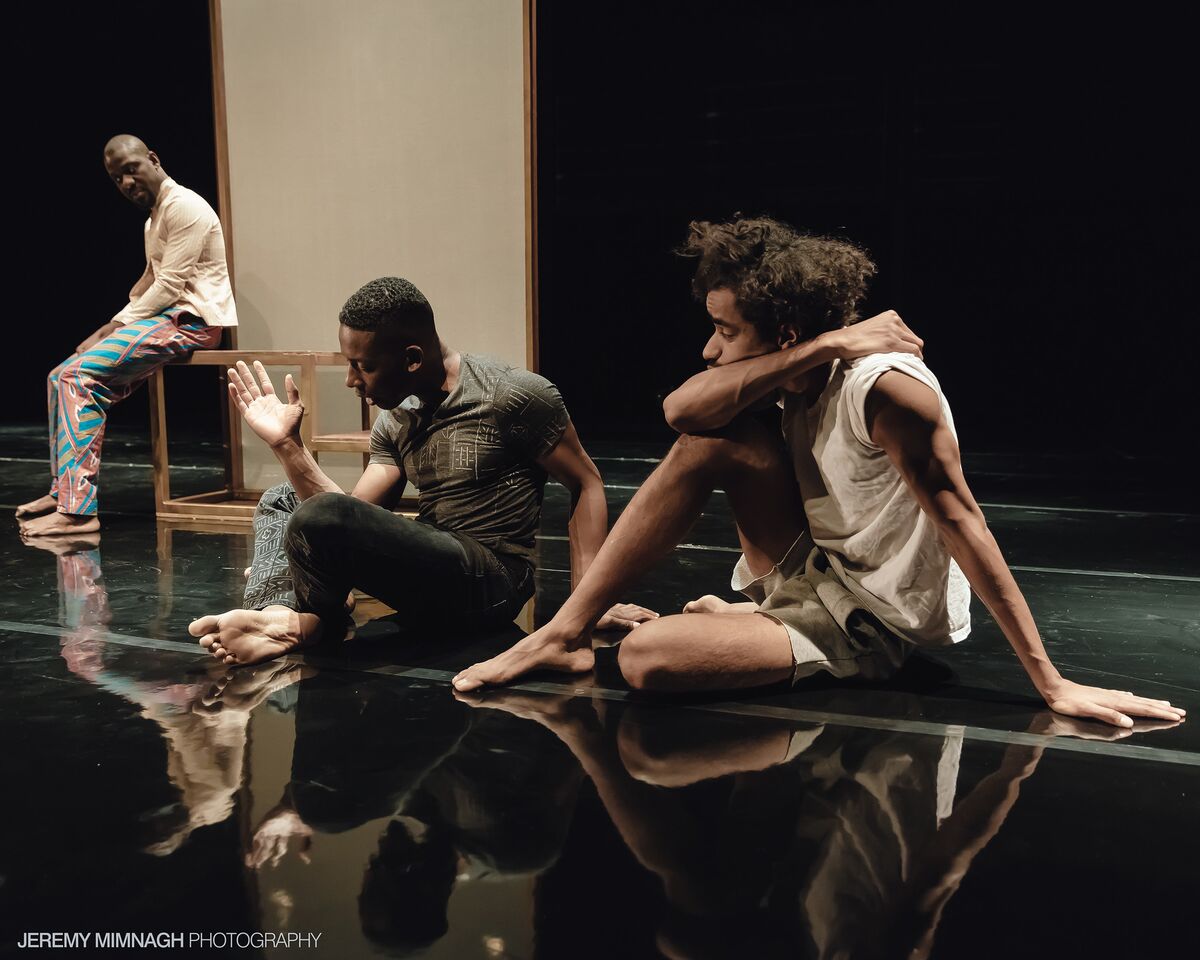
DON'T MISS BLACK BOYS, RUNNING AT BUDDIES IN BAD TIMES THEATRE UNTIL DECEMBER 11TH. A REMARKABLE PERFORMANCE BY THREE INCREDIBLY TALENTED YOUNG MEN. 

BREAK NECKING PACING, HEATED DEBATES THAT RAISE SIGNIFICANT QUESTIONS FOR AUDIENCES TO CONSIDER AND TAKE RESPONSIBILITY FOR, MUSIC AND EXQUISITELY CHOREOGRAPHED DANCE (BY VIRGINIA GRIFFITH) THAT PUNCTUATES THE ACTION THROUGHOUT - THIS IS AN INCREDIBLE NINETY-MINUTE TOUR DE FORCE THAT RACES BY WITH THE FINESSE AND BEAUTY OF A TRULY ARTICULATE AND VASTLY ENTERTAINING PIECE OF DANCE/PERFORMANCE/THEATRE. 

ALL THREE ACTORS TAKE ON STARRING ROLES AS THEY EXPLORE THEIR OWN PERSONALITIES IN RELATION TO BEING A QUEER PERSON OF COLOUR IN A THEATRE WORLD AND A SOCIAL ENVIRONMENT DOMINATED BY IMAGES OF WHITENESS.

AND SO I INVITE YOU TO ENGAGE. TO ENGAGE WITH THIS SHOW, WITH THE NECESSARY AND CHALLENGING CONVERSATIONS IT MAY PROVOKE. WITH THE ARTWORK. WITH THE COMMUNITY FORUM ON BLACKNESS, QUEERNESS, AND MASCULINITY. AND WITH THIS WORLD OF OURS, WHICH ASKS EACH OF US TO CREATE MORE SPACE FOR THE MULTIPLICITIES OF WHO WE ARE NOW, AND WHO WE CAN IMAGINE OURSELVES TO BE.
Evelyn Parry, Artistic Director, Buddies In Bad Times Theatre


l-r STEPHEN JACKMAN-TORKOFF, TAWIAH BEN-EBEN M'CARTHY, THOMAS OLAJIDE


RUNNING AT BUDDIES IN BAD TIMES THEATRE UNTIL DECEMBER 11TH

DANCEWORKS PRESENTS tiger princess dance projects/Yvonne Ng

 photos by Cylla von Tiedemann


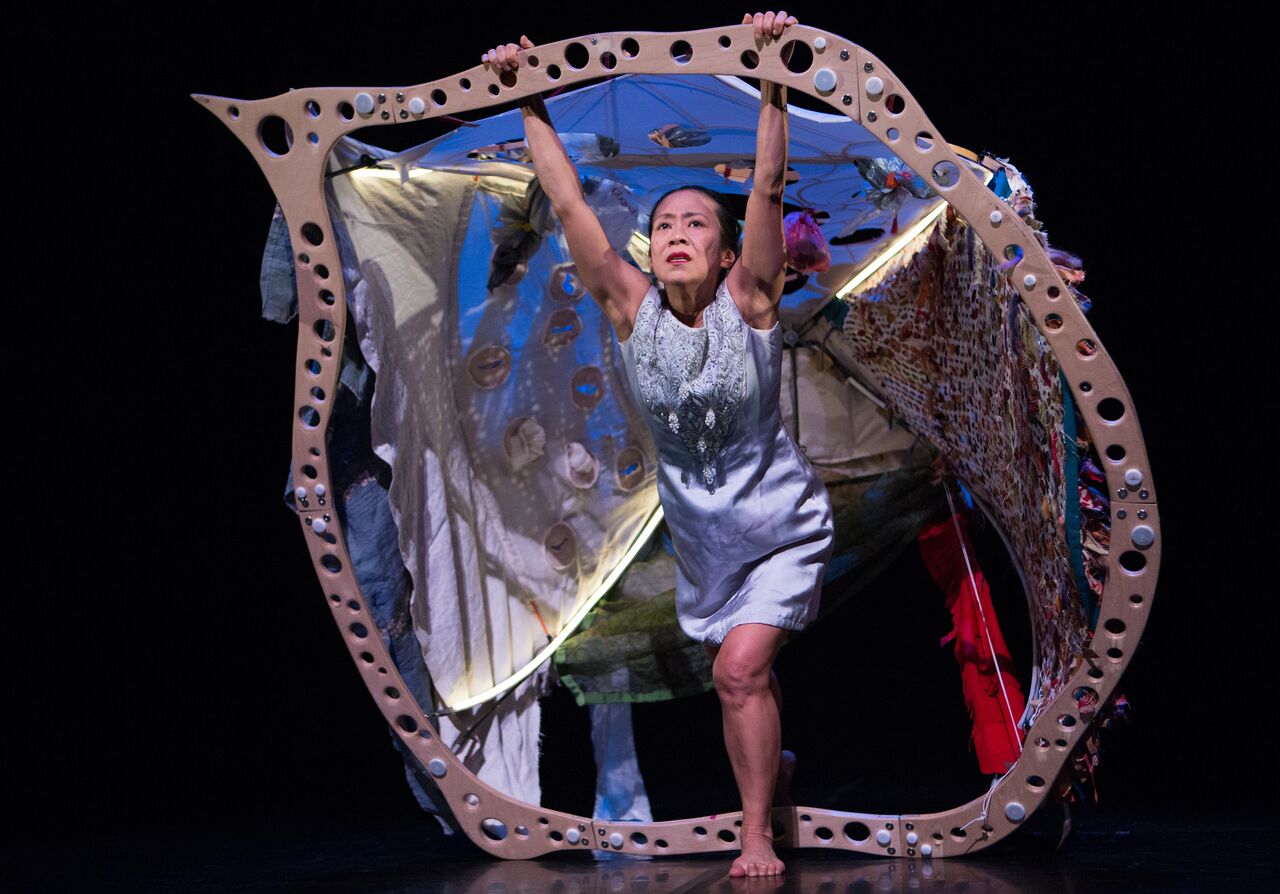
Yvonne Ng 
tiger princess dance projects


Yvonne Ng's two dances reveal interrelationships of identity, memory and history. The title of the first  piece, In Search of the Holy Chop Suey, is humorous, but it asks a rather profound question. What makes us who we are? - Mimi Beck, Dance Curator


“In the late seventies/early eighties, there was a TV series called In Search of … that focused on mysterious phenomena, e.g. Loch Ness, Holy Grail, Big Foot, etc. But they would never find the ‘thing’ that was the subject of the particular episode. Chop Suey is a dish that reportedly originated from migrant Chinese workers who lived in the U.S.A. in the 19th century. When I was young, living in Asia, I wanted everything Western. I knew about the dish and equated it to something Western/North American. The title is a comment on my belief that each of us has a deep desire to find meaning for our lives — even as that meaning eludes us and/or is not what it seems.”
The two works comprising Yvonne Ng's double bill act as perfect counterparts to the experience of identity in both solo and ensemble formations. In Search of the Holy Chop Suey plays with an elaborate set piece (designed by Silvie Varonne & Yvonne Ng) that Ng inhabits during the entire twenty minute performance. She peeks out, intimately resides within, and humorously penetrates, as she takes part in at times manic, pensive, and all around engaging movement. Utilizing built-in cloth arms on the outside of this gorgeous contraption, Ng and her fabulous installation prop traverse the stage in a playful and mesmerizing manner. Especially engaging when she is peering out of the many surface layers of the tent-like structure, and moving her hands in and out of various arm extensions - Ng becomes a kind of multi-limbed goddess like figure, simultaneously honouring and delighting in humorous poses that reflect the complex identity structures and influences that she works into the overall piece. 

There are moments when one yearns for a break from the elaborate sculptural tent in order to give performer and object a space in which to breathe and separate - possibly enacting  and adding less prop connected choreography to the piece. And yet, in tandem with the second offering of the evening, In Search of the Holy Chop Suey provides a short, delightful, and at times powerfully manic waltzing camp[y]ground that speaks to the act of identity formation in a world where displacement and cultural amalgamation can create a very layered sense of who we are and what our collective and individual lives mean within the larger scheme of things. Visually, Ng's moveable tent is a world, a playhouse, a kind of micro/macro cosmic, blue layered omelette'ish, swiss cheese, hole filled layer of culturally caged and cagey proportions - a  mini paradise of form and substance that dominates yet enwraps the performer in a beautiful and enchanting dance habitat.


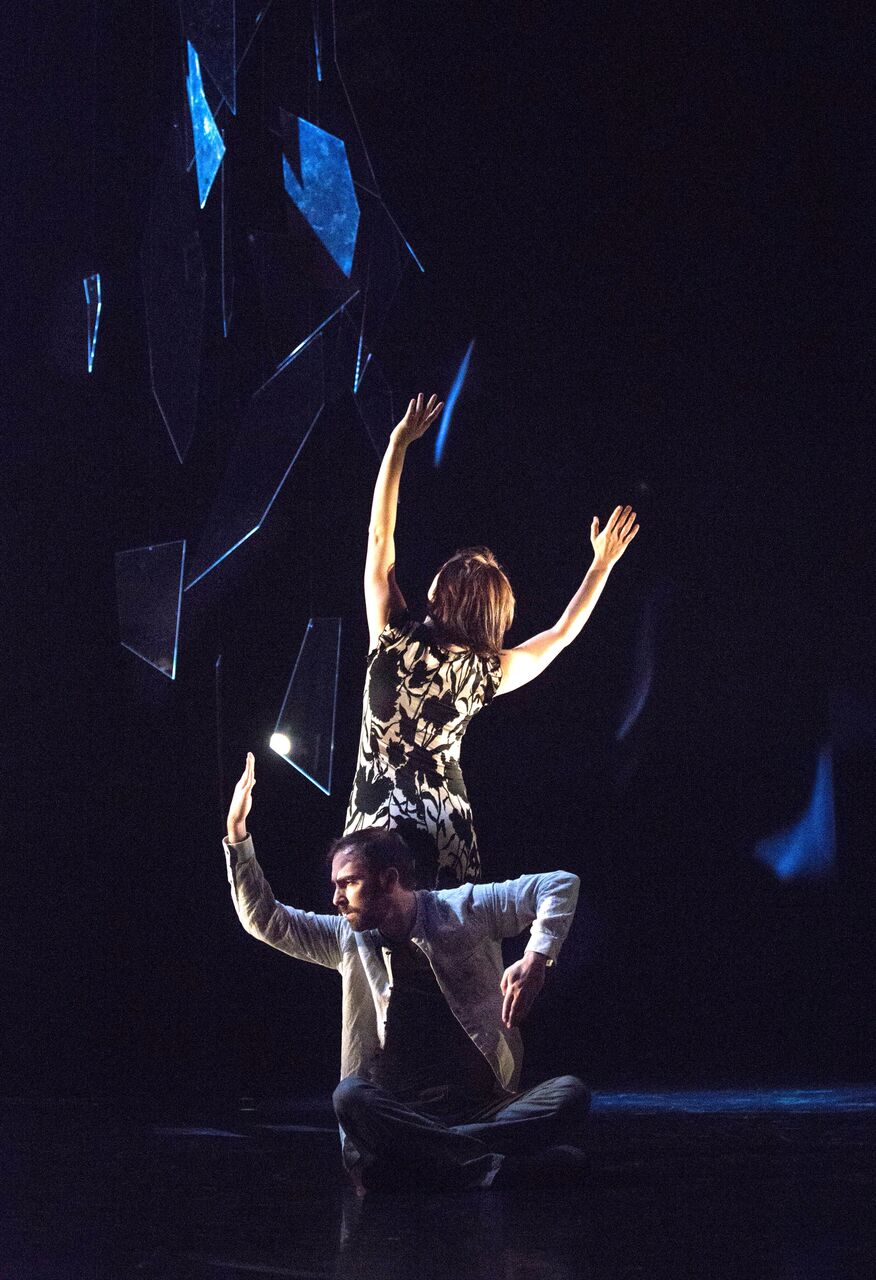
In the second offering of the evening - Zhong Xin (meaning human centre in Mandarin) - Ng further develops the  concept of identity in a less performance/moving insallation mode with three skilful dancers who take on a variety of engaging choreographic sequences. Luke Garwood exemplifies intense varied movement at its finest. The individual performances stand alone as extended examples of identities being formed both separately and as a threesome. Mairéad Filgate, in a b/w patterned dress genders the costuming in a way that elegantly opposes blended identity as the only feminine signifier onstage. And yet her powerful presence acts as a beautifully realized third element of the triumvirate of identity created in collaboration with Ng and the other two performers. Irvin Chow brings a robust presence to an invigorating ensemble, and rounds out the trio with nuanced and layered presence that at times couples in enigmatic ways with Garwood's contrasting physicality. All three dancers inhabit the space with a beautifully conceived sense of finding inidivudal spots to feature themselves within, yet discovering each other by the end within a powerful and layered three pronged display of ecstatically refined denouement - as they stand together and present a final tableau that powerfully ends their diverse search through identity formation and expression.


tiger princess projects presented In Search of the holy Chop Suey & Zhong Xin at Harbourfront  Centre from 
Novemebr 24-26

Thursday, November 24, 2016

George F. Walker's The Damage Done

THE DAMAGE DONE
photos by Michael Cooper

To have seen Tough not so long ago - George F. Walkers first instalment of a dramaturgical triptych, begun in the 1990’s - through the contemporary lens of Ken Gass’ Canadian Rep Theatre, was a refreshing look at the ways in which an older script can begin to reflect epic concerns in a planetary card game of towering losses, frightening trumps, and hard won gains. One upping himself through the use of two decades of aging, maturing, and complex bitterness, Walker’s characters in his newest creation - The Damage Done - have given in to just about everything - except love. Love comes their way and they take it. And from a Marxist, perhaps decaying socialist perspective, filtered through capitalism, well, why the hell not? It’s there for the taking by two physically beautiful people who use their youth and their desperation to make their way through a stultifying world fraught by the allure of drugs, sex, and the agitating numbness of poverty - and relative wealth. 


In last summer’s re-mount of Tough Ken Gass turned a three person play into a multi character ensemble in order to reveal a kind of diversity that struggled but ultimately shone through. It was an admirable attempt that showcased the talents of a large cast of young actors who drove the socially relevant points home in an intense, refracted way within versatile walls of a minimalist set inhabited by the energy of youth, sagging hopefulness, and teenage lust. Eighteen years later, The Damage Done, a two person play is just that - two people onstage for seventy-five minutes trying to sort it all out - all that has happened over nearly two decades - and how to proceed. 


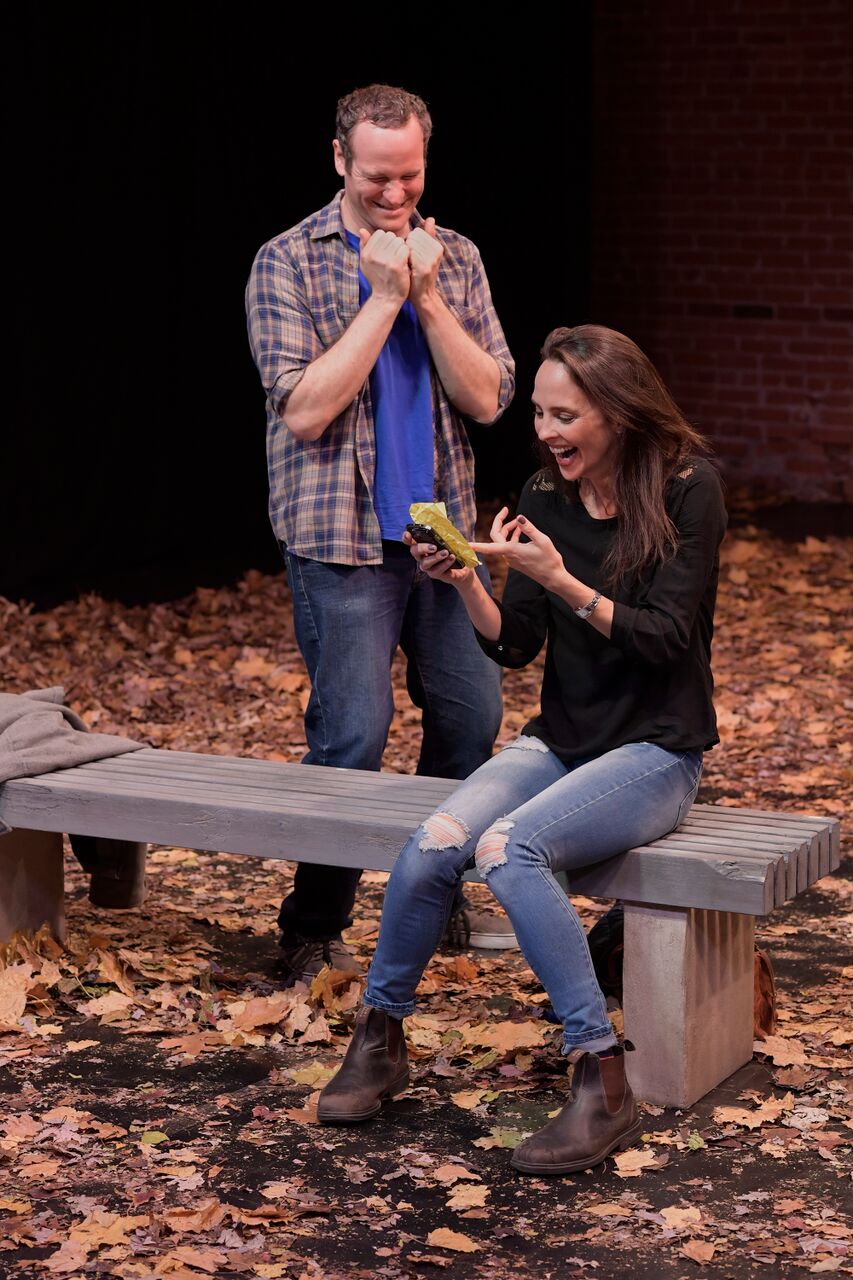
Sarah Murphy and Wes Berger

The set has a stark autumnal flare that serves the purpose very well. And yet, with the ghost of Tough wandering through the space, one cannot help but wonder what this production might have been like if Gass had chosen to use an ensemble instead of a two character format. Fracturing the naturalism into frayed character portrayals, in order to show facets rather than single, finely cut snapshots of two tragicomic characters in search of a play within a play - in search of lives beyond the ones they have already lived - well, it’s complicated. But Tough showed audiences that it can be done. The Damage Done is of course play - a play closer to a sitcom than a drama, yet wobbling a bit uneasily between the two forms. 

Walker has always been a master of this double edged sword, and in The Damage Done there are many fine moments, and a wonderful balance between the voices of two genders at odds with each other - and yet attracted somehow to the unease their roles have demanded of them. They play of sex and gender in a stagey, guarded, infrequently explosive manner - that could have added a touch of libido here and there to heighten the stakes. The performance are strong and yet the sex, although present, seems to live in the past.


Sarah Murphy as Tina possesses a direct, powerful command of the breakneck pacing the quick dialogue demands. Her emotional moments are strong and moving, and yet they tend to belie to some degree the rapidity of her more manic, conversional  strategies. In general, everything needs to be picked up a little. There is a bit too much room to breathe at times during the vocal and emotional pacing. When Tina breaks down, given her recent forays into self examination and a need to recover, her persona might fare better within a less weepy, more layered palette. Crying and resisting crying, simultaneously, could strengthen the colours of her need. Murphy does sob and break down very well, but needs a bit more of the uneven quality common to this kind of pathology. And when she has to physically joust with her ex it is just a case of slightly bungled stage business that needs to be stepped up - faster quicker and far more frenetic than the slow clumsy threat of a kick in the balls that occurred on opening night.

Wes Berger as Bobby parallels Murphy’s powerful and studied performance with many charming moments. His emotional narrative is not written with the same levels as Tina’s. Bobby seems to have mellowed into a bowling loving, aspiring playwright bellowing fellow who finally - at times begrudgingly - seems to get it when his ex lets him know that he has been the proverbial deadbeat dad for almost two decades. Wow! Take your time buddy. She has done all the work, all the good and the bad, and the damage has been done, undone ,and now it’s time for a shift in custodial care. Get it Bobby! Good!

The shadows, or even suggested presence of the two young women, Bobby and Tina’s teenaged daughters - alongside younger versions of the couple traversing the wide open leaf laden playing space - might have shifted a long sitcom’ish dramedy into a somewhat more powerful section of a three part mini series. A version of The Damage Done staged in the way Tough was staged could take the television aspect out of the drama and put it firmly back into the theatre. But as it stands, The Damage Done is an extremely engaging, humorous, and at times moving examination of the ways in which desperation born out of poverty can mature into the fragile compromise of hard won wealth, and then morph into two bitter - frequently sweet - people meeting in a park to talk about their lost youth. And it’s fun, and it’s sad. And now they are back at square one, in a park, and the park is empty. But the dramedy is full, embodied, flawed here and there, but at times rich and layered for the taking by audiences craving more of Walker’s limitless concern for people and their very serious problems.


GEROGE F. WALKER'S
THE DAMAGE DONE RUNS AT THE CITADEL UNTIL DECEMBER 11TH